
[ Post a Response | Hardy Palms In Temperate Zones Board ]
 Join the discussions, no logins or passwords needed, ever.

Posted by Rob N TN on December 9, 2025, 3:58 pm
Trachycarpus wagnerianus has proven to be the best trunking palm for z6 and z7a/b, at least in my area with minimum protection.
Some references are now giving it a zero hardiness for young palms (with protection) and minus -10* for mature and older palms (with little or no protection) 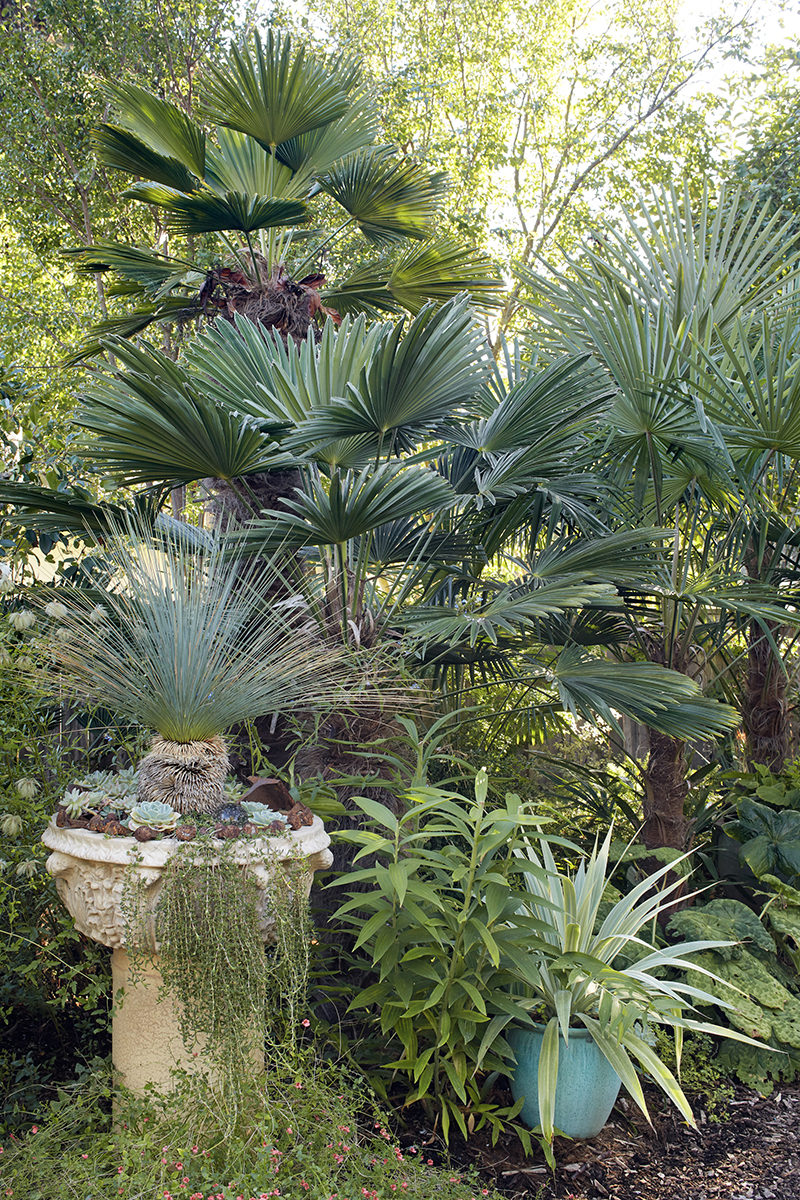
ᴘʜᴏᴛᴏ ʙʏ ꜰʟᴏʀᴀ ɢʀᴜʙʙ'ꜱ ɢᴜɪᴅᴇꜱ
Growing Notes
Waggie palms have a shorter petiole and smaller, stiffer, blunted leaves than the typical windmill palm. They are also slower growing. Many growers think it is the most durable and beautiful of all trachycarpus.
This palm is from the Himalayas and has adapted to have a furry trunk that insulates the palm from extreme cold. The furry trunks are great for mounting epiphytes, but Trachycarpus can also be “skinned” by removing the lingering furry leaf bases. This transforms the palm, giving it a slender, beautifully ringed trunk. The trunk will be light green at first, fading to black and then gray over time. To skin your palm start with the lowest leaf and use a serrated knife or hori hori to cut around the base of the old leaf where it connects to the trunk. Cut from one side to the other, pulling on the leaf and cutting through the leaf base, but not into the trunk. Getting started is a little tricky, but once you have part of the trunk skinned it’s easy going. If you live in a hot humid climate the fuzzy trunk will shed naturally, leaving a clean ringed trunk.
These palms grow well in the sun or shade, but present in shade with long bouncy leaves. In sun the leaves are stiffer with shorter petioles (leaf stems).
If planted at an angle, Trachycarpus will develop a pleasing upward bend as they grow towards the light.
Avoid planting in a high wind area; they’ll grow fine in the wind but won’t look as lush, with brown tipped leaves. Waggie palms are the best choice of the trachycarpus in wind.
The waggie palm, with its smaller blunted leaves, is one of the best palms for growing in a medium to large sized pot.
Palms are generally heavy feeders, so if you want them growing quickly and looking their best, they should be fertilized at least three times a year. Fertilizing at spring equinox, summer solstice and fall equinox will allow for a winter rest. Be sure to feed your palm with a fertilizer that contains micronutrients (especially including magnesium), especially if you see yellowing leaves or yellow spots on the leaves.
You might think of palms as warm-weather plants, but many Trachycarpus are from the Himalayas, making them some of the most cold-hardy palms, thriving in areas as cold as -4F. So much for that tropical stereotype. They do great in pots too. 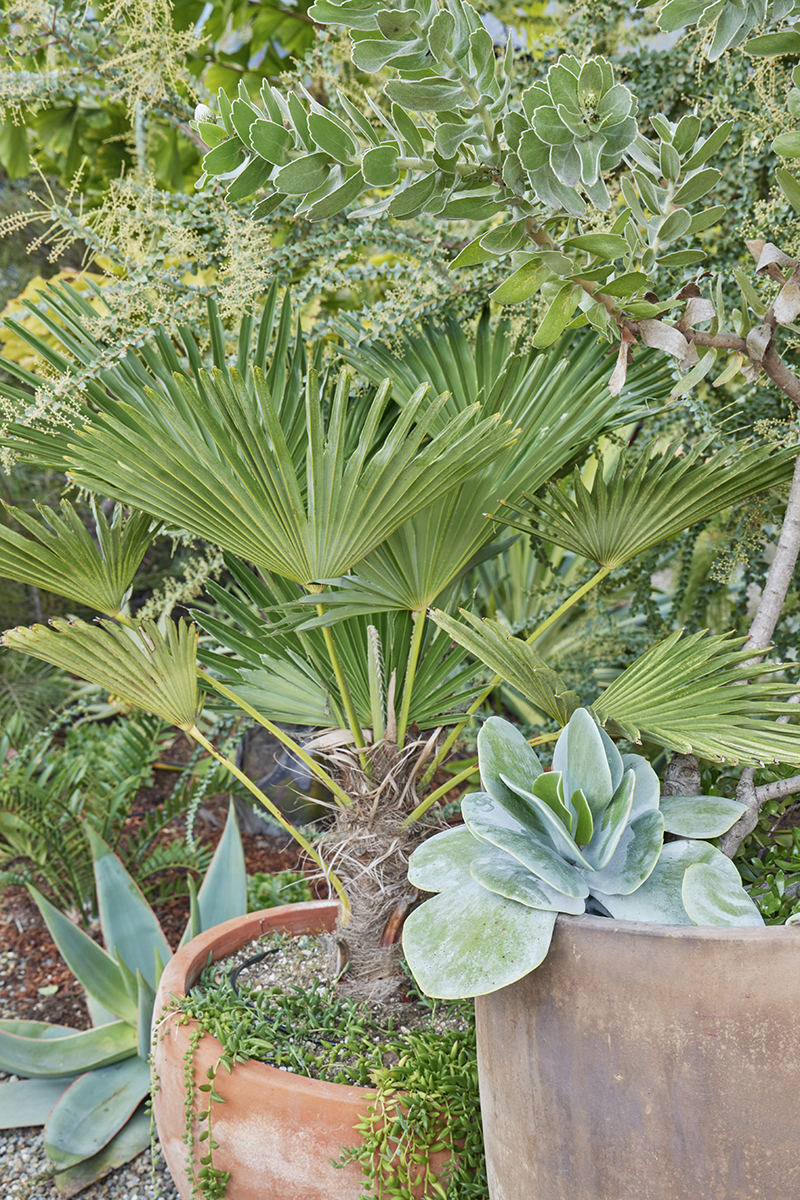
ᴘʜᴏᴛᴏ ʙʏ ꜰʟᴏʀᴀ ɢʀᴜʙʙ'ꜱ ɢᴜɪᴅᴇꜱ
362
Responses
 Welcome to the forum.
Contact: hardypalmsintemperatezones@gmail.com
Visitors are urged to post any information pertinent to plants, weather, or topics related to either. Off-topic posts, Spam posting, "inflammatory posts" and advertisements are subject to removal at the discretion of the moderators.
NEW FEATURE FOR LOADING PHOTOS IN YOUR MESSAGES: The HARDY PALMS IN TEMPERANT ZONES has a great new feature when adding photos into your message body. As of May 2010 , You can now add photos in your message body straight from your computer files and we recommend Imgbb found in the message body form. * Your certainly welcome to transfer photos from your Photo Albums located in on-line Photo Albums like Imgur, Photobucket or others.
.
.
* If you have an address for the photo, you can use html language to post a photo. example:
<
img
(space)
src
=
"
(photo address)
"
>
leave no spaces except between img and src.
all html language must be used <=" ect. (tightly)
.
.
.
The address of the photo must fit between the " " tightly
.
.
.
* If anyone has any issues with this forum at any time, please feel free to let me know. Thank you. Barry z7b Mississippi - moderator
* hardypalmsintemperatezones@gmail.com
.
.
.
Welcome to the forum.
Contact: hardypalmsintemperatezones@gmail.com
Visitors are urged to post any information pertinent to plants, weather, or topics related to either. Off-topic posts, Spam posting, "inflammatory posts" and advertisements are subject to removal at the discretion of the moderators.
NEW FEATURE FOR LOADING PHOTOS IN YOUR MESSAGES: The HARDY PALMS IN TEMPERANT ZONES has a great new feature when adding photos into your message body. As of May 2010 , You can now add photos in your message body straight from your computer files and we recommend Imgbb found in the message body form. * Your certainly welcome to transfer photos from your Photo Albums located in on-line Photo Albums like Imgur, Photobucket or others.
.
.
* If you have an address for the photo, you can use html language to post a photo. example:
<
img
(space)
src
=
"
(photo address)
"
>
leave no spaces except between img and src.
all html language must be used <=" ect. (tightly)
.
.
.
The address of the photo must fit between the " " tightly
.
.
.
* If anyone has any issues with this forum at any time, please feel free to let me know. Thank you. Barry z7b Mississippi - moderator
* hardypalmsintemperatezones@gmail.com
.
.
.